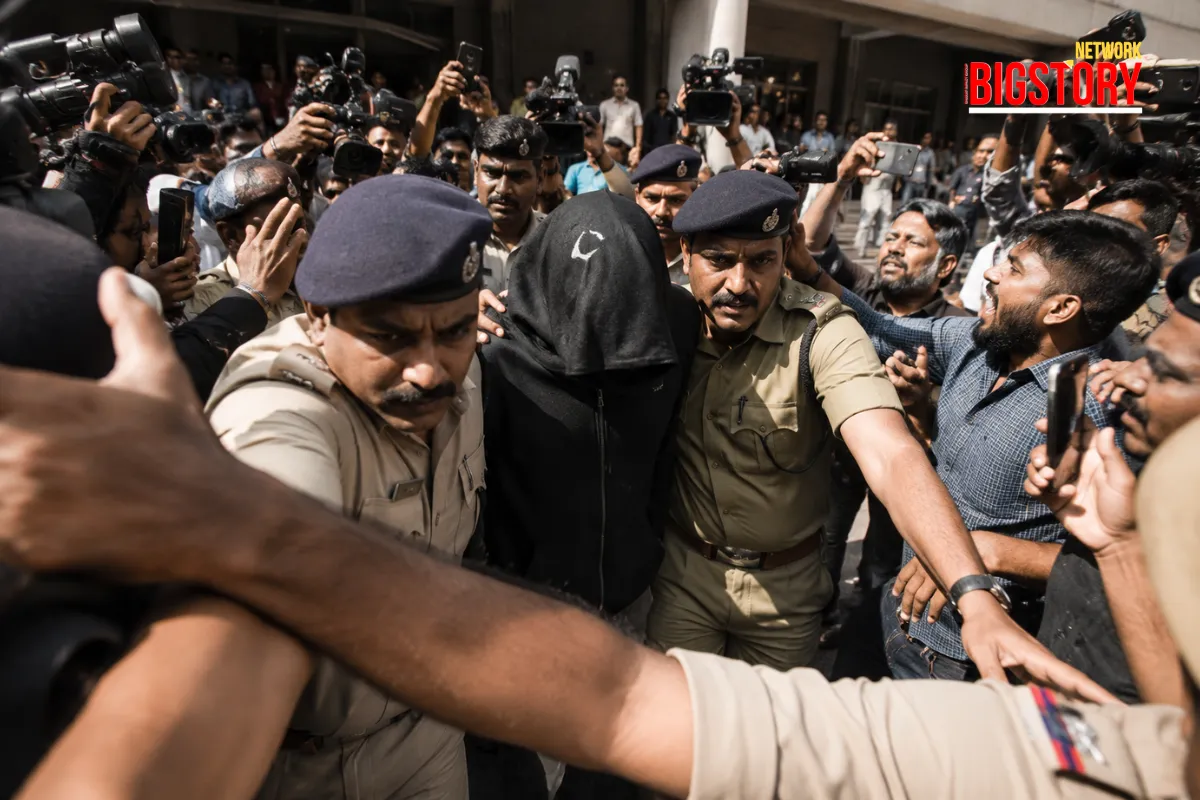
Reigniting a massive socio-political debate, the apex court warns that the cycle of reservations will never end if affluent families do not exit the system after achieving social and economic mobility.
 Brajesh Mishra

• What happened: The Supreme Court strongly questioned the continued grant of OBC quota benefits to the children of economically and educationally advanced families within backward classes.
• Why it matters: Pointedly asking why children of IAS officers still require reservations, Justice B.V. Nagarathna observed that families must eventually exit the quota system once social mobility is achieved.
• The strategic play: The oral observations stem from a Karnataka petition debating whether a government employee's combined salary or their occupational rank should dictate their exclusion under the "creamy layer" rule.
• India's stake: The Court's stance challenges a foundational premise of traditional Mandal politics, which argues that caste-based stigma outlives individual economic success.
• The deciding question: Will these judicial observations translate into a strict, mobility-based exit policy, fundamentally altering how India defines and administers affirmative action?
The national debate over the "creamy layer" has just been reignited from the highest bench in the country. Today, the Supreme Court strongly questioned the unending cycle of reservation benefits being granted to the children of economically and educationally advanced families within backward classes.
During a highly scrutinized hearing, a Supreme Court bench comprising Justices B.V. Nagarathna and Ujjal Bhuyan orally questioned the rationale behind granting Other Backward Classes (OBC) reservation benefits to the children of highly placed government officials.
Justice Nagarathna explicitly framed the core issue: "If both parents are IAS officers, why should they have reservations? With educational and economic empowerment, there is social mobility." The Bench issued a stark warning regarding the future of affirmative action, observing that to continually seek reservations for the children of the affluent means "we will never get out of it."
The remarks were made while hearing a petition challenging a Karnataka High Court judgment. The judgment had upheld the exclusion of a candidate, Raghavendra Fakeerappa Chandranavar, from the Category II-A (OBC) quota for an Assistant Engineer post. The exclusion was based on the fact that both his parents were state government employees and their combined income exceeded the ₹8 lakh threshold.
Advocate Shashank Ratnoo, representing the petitioner, argued that for government employees, creamy layer exclusion must be based on their occupational status (such as holding Group A or Group B posts) and not purely on their combined salary income. Equating salary with social status, he argued, would unjustly exclude lower-ranking government employees like clerks or drivers who cross the income threshold solely due to accumulated pay revisions.
Ratnoo further argued that if all income forms are strictly counted for OBCs, it blurs the line between the OBC creamy layer and the Economically Weaker Section (EWS) quota. The Bench responded by drawing a firm distinction: EWS addresses strictly economic backwardness, whereas social and educational reservations require a "balance" once a family overcomes its historical social disadvantages.
Mainstream coverage will focus on the specific Karnataka petitioner, but the "Missed Angle" here is the deep ideological friction building between the Judiciary and the current political consensus.
By legally equating "economic and educational empowerment" directly with "the end of social backwardness," the Supreme Court is actively challenging the foundational premise of traditional Mandal politics.
Quota advocates have long argued that caste-based stigma and systemic discrimination outlive individual economic success. Under this view, an IAS officer from a backward class still faces deep-rooted societal barriers that a wealthy upper-caste individual simply does not. However, the Supreme Court's oral remarks signal a hard judicial shift toward a purely mobility-based exit strategy.
• Constitutional Showdown: The Court's stance sets the stage for a massive constitutional clash over whether caste-based quotas are meant to be a permanent societal fixture or a temporary, generational ladder.
• Policy Recalibration: This hearing closely follows the March 2026 ruling (Union of India v. Rohith Nathan), which reaffirmed that occupational status—not just parental salary—must play a primary role in creamy layer exclusion. The government may be forced to radically clarify its administrative guidelines to avoid endless litigation.
• Political Fallout: As state assembly elections approach, any judicial move to restrict quota access for the affluent subset of OBCs will instantly become a highly volatile political weapon for both the ruling party and the opposition.
If reservations were designed to correct historical social injustice, at what precise financial or occupational milestone does the state decide that the injustice has been cured?
• Bar & Bench: Supreme Court Litigation and Legal News Updates
• LiveLaw: Supreme Court Hearings and Constitutional Law Precedents
• The Hindu: National Legal and Social Justice News
• The Indian Express: India News, Judiciary, and Policy Tracker
 Exclusive Content






Sign up for the Daily newsletter to get your biggest stories, handpicked for you each day.


 Trending Now! in last 24hrs